Wednesday, 22nd July 2026
Technical Update from the forensic excavation at the site of the former Mother and Baby Institution in Tuam, Co. Galway
Reporting period: 1st June 2026 – to 15th July 2026
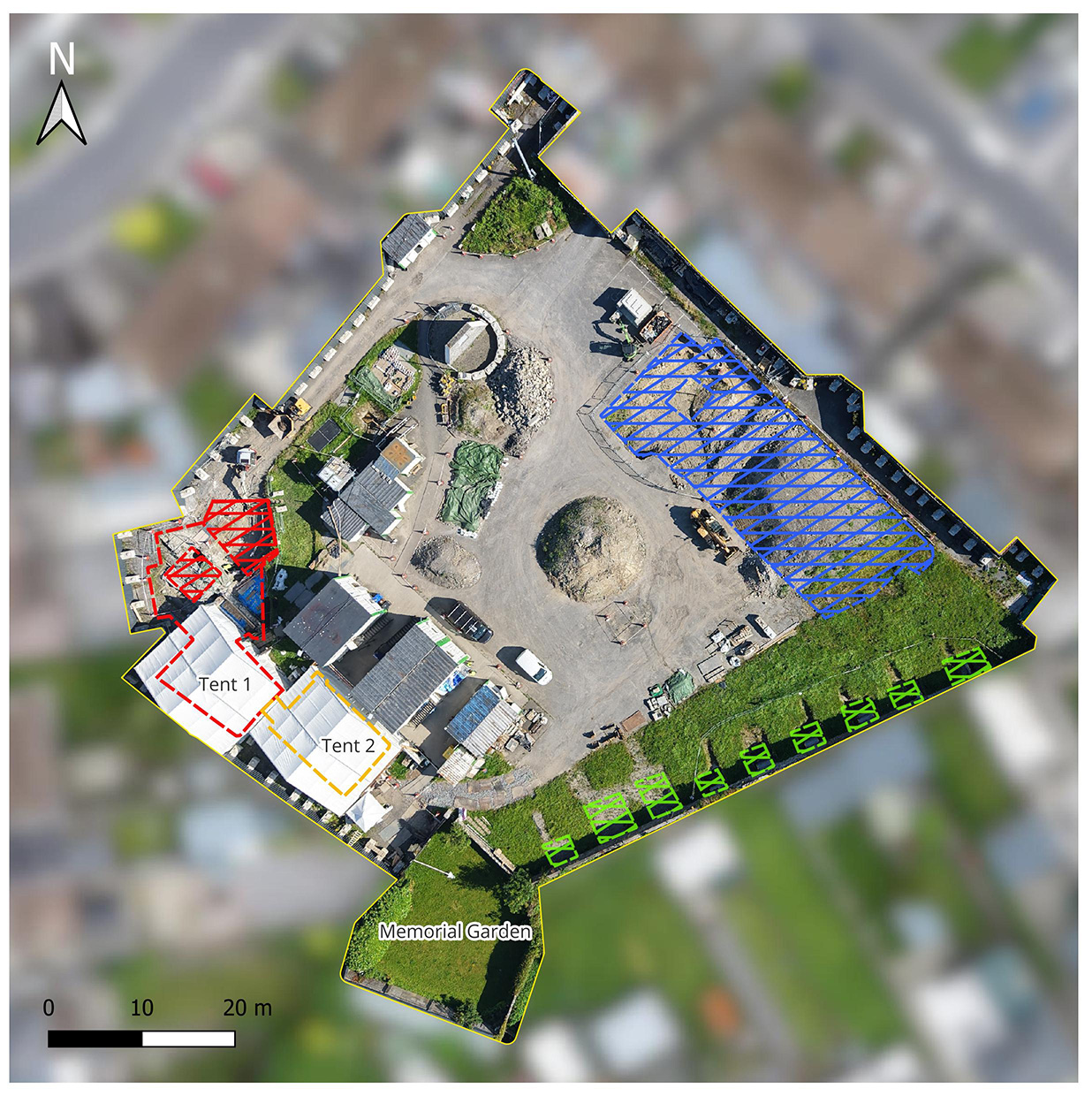
ODAIT’s Forensic Excavation team are examining a 0.48 Ha site of the former Mother and Baby Institution at the centre of a housing estate in Tuam, visible in the photo below.
In the photo below, all areas that have been excavated are outlined in colour and all areas that are considered completed are hatched. In this reporting period, excavation has focused on locations outlined in the photo below.
The area currently under excavation (red and yellow outlines in the photo below) was previously covered with bitumen and gravel and used for vehicular access.
Red outline: Hand excavation within the subterranean vaulted structure was completed. Excavation continues around its exterior. No excavation took place in Tent 1 during this period.
Yellow outline: Hand excavation continued under Tent 2.
Blue outline: The area of the blue outline is now completed, apart from the base of a subsurface well. This well has been excavated to a depth of four metres, and further excavation is on temporary hold for health and safety reasons.
Green outline: These areas are completed and reported on in previous updates.
Red and Yellow outlines in detail
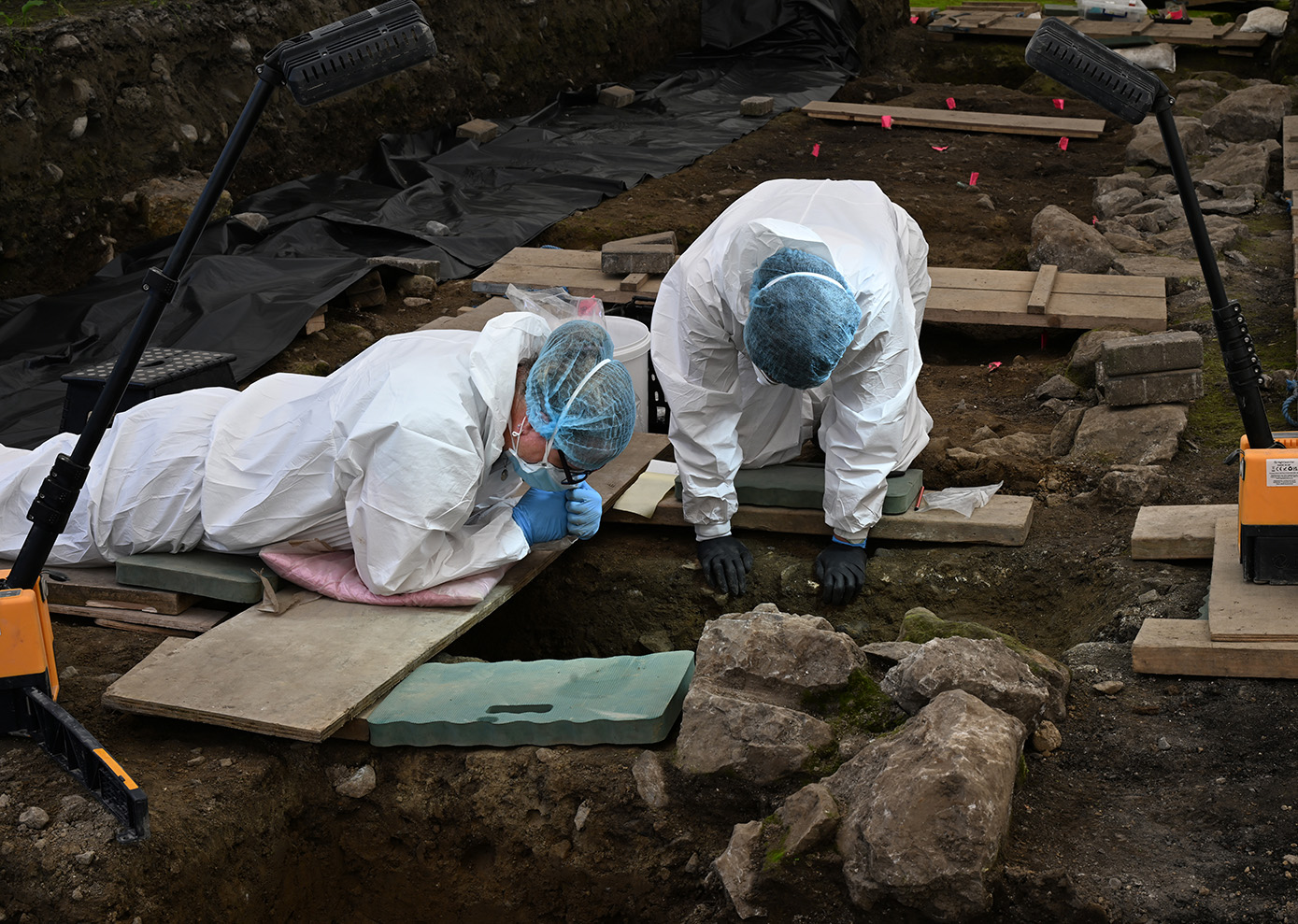
During this reporting period hand-excavation continued under forensic control in Tent 2. As detailed in previous updates, the evidence ODAIT has recovered is consistent with this area being part of a burial ground from the time of the operation of the Mother and Baby Institution and it falls within an area identified in historical documents as a “burial ground”*. This location was previously covered with bitumen and gravel and used for vehicular access. There were no surface markers to indicate the presence of burials.
Human remains
Red outline – Tent 1
No further excavations took place under Tent 1 during this reporting period. As reported on in earlier updates, the remains of 77 infants were recovered from this location, and earlier historic burials were identified beneath these.
Red outline – Subterranean chamber
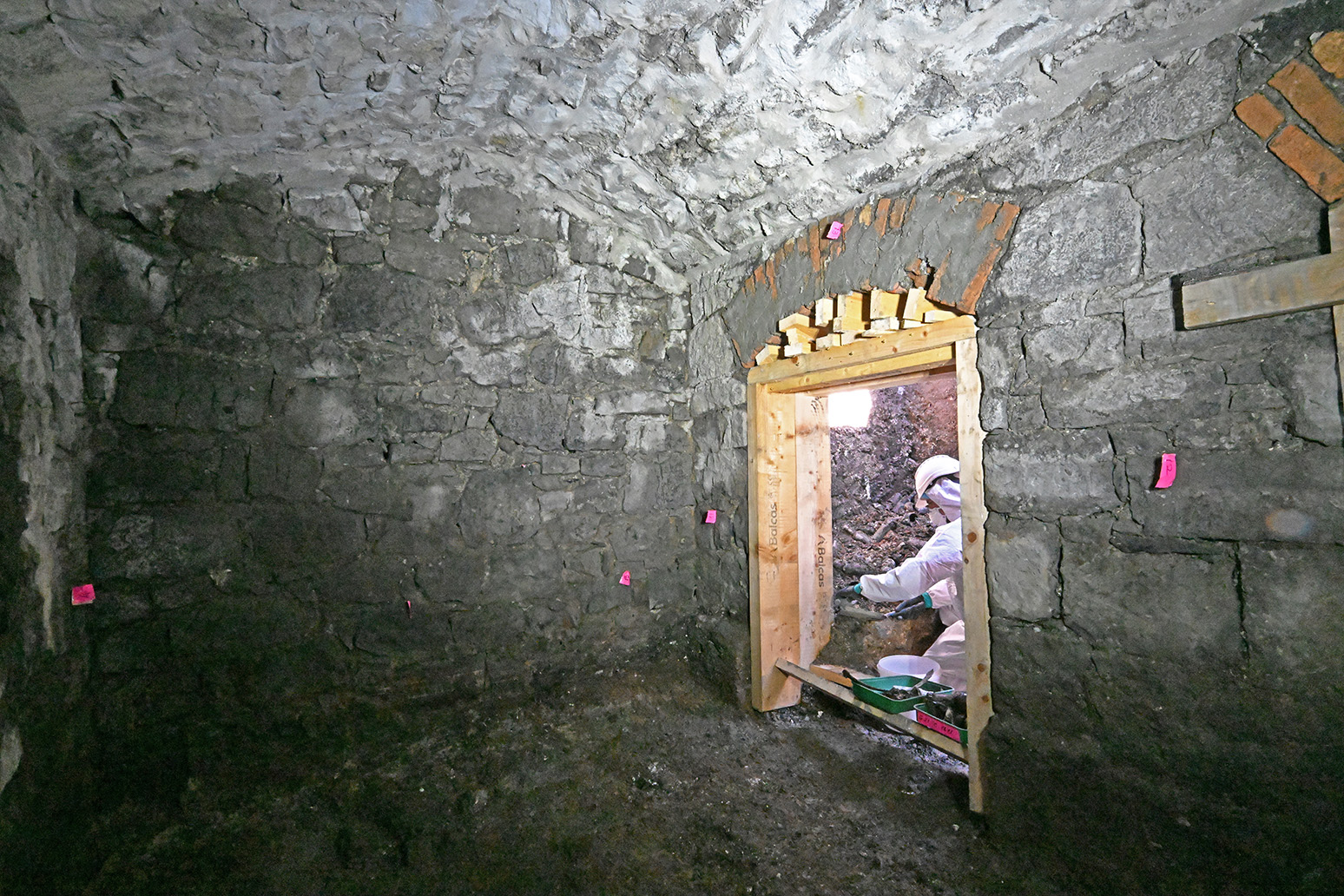
The forensic excavation of all deposits within the subterranean chamber was completed during this reporting period. Disarticulated human remains (individual bones) from at least one infant were recovered; however, there was no evidence that these remains had been intentionally placed within this chamber. These skeletal elements were found at the base of a manhole, or access chamber, and were located above deposits containing material evidence of pre-institutional date.
Yellow outline – Tent 2
Forensic excavation of burials commenced under Tent 2 during this reporting period. The remains of 22 coffined infants were recovered, and hand-excavation is continuing.
Artefacts
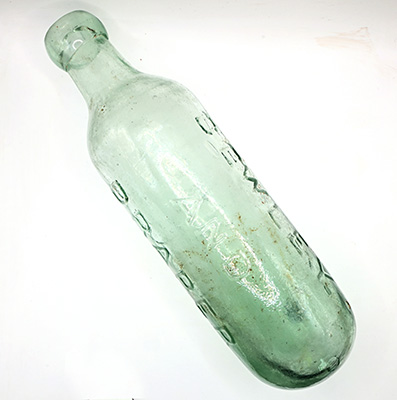
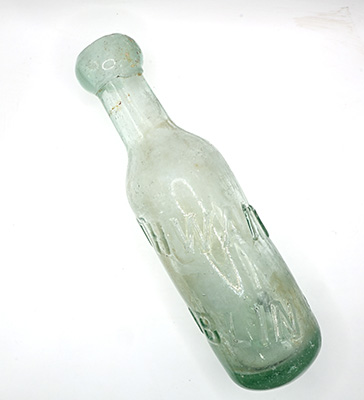
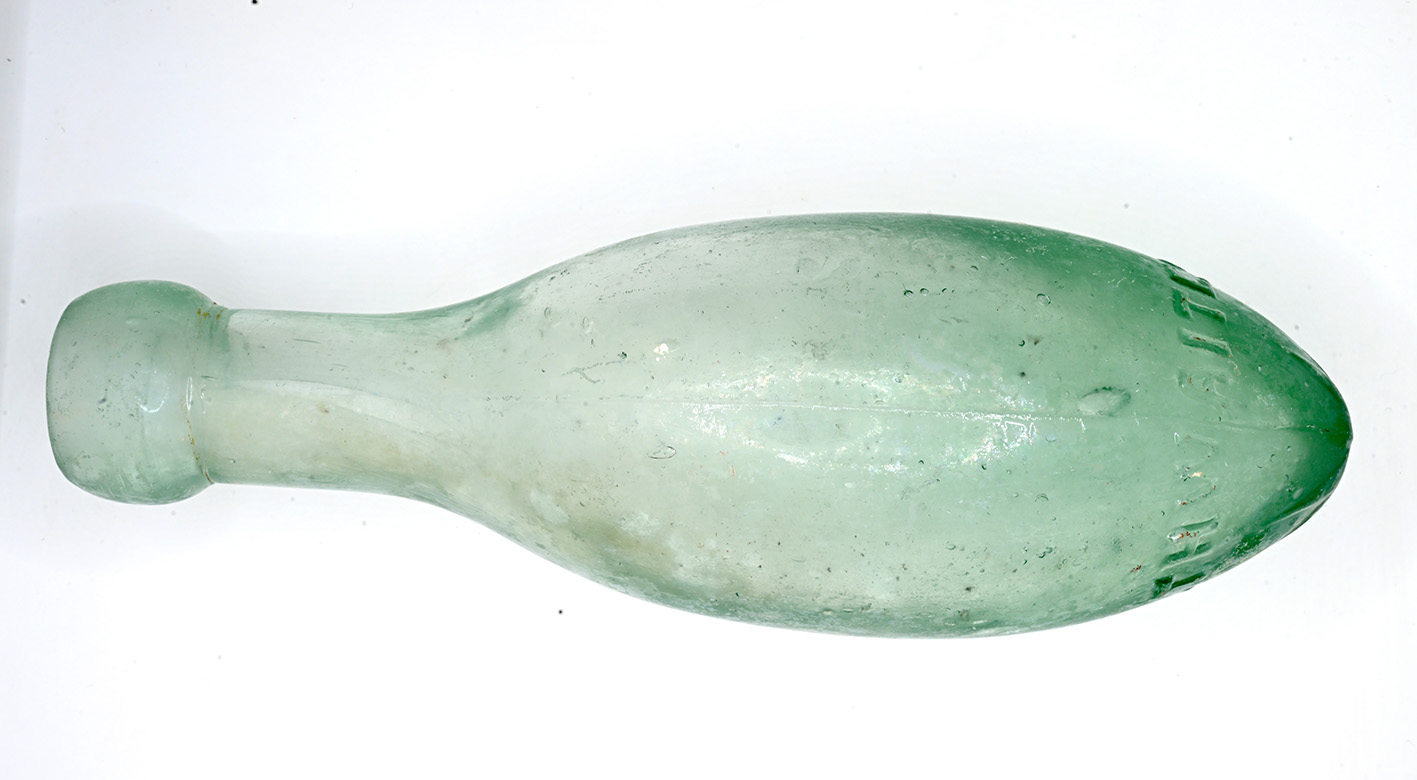
The artefactual evidence found within the subterranean chamber included several intact and many more fragmentary glass bottles. The identifiable bottles include torpedo soda bottles marked ‘Bewley and Draper, Dublin’ and ‘Thwaites, Dublin’. The Registered Trade Mark stamp on one of these informs us it was produced after 1875, when the UK Trade Marks Act was enacted.
Identification Programme
The Identification Programme team collected an additional 7 DNA reference samples during this period which have been delivered to Forensic Science Ireland (FSI). This brings the total number of DNA reference samples taken to 62.
ODAIT continues to engage with first cousins to prepare for the statutory determination process pending the Governments amendment to the Institutional Burials Act 2022 to include first cousins as eligible family members who can provide a DNA sample.** The team will continue to reach out to first cousins as part of this process.
ODAIT would encourage anyone who believes they may have a family member buried at the site of the former Tuam Mother and Baby Institution to contact our office. Our team can answer any questions and help guide you through the process. You can call +353 (0)1 539 1777, email info@dait.ie or visit our website www.odait.ie for more information.
Toghermore Forensic Facility and Mortuary
ODAIT’s forensic analysis is beginning at its new Forensic Facility and Mortuary in Toghermore following the works to the building and the fit out of the laboratory delivered by the Office of Public Works (OPW). This facility is essential to ensure ODAIT can maintain dignity for the deceased and international best practice standards in its work.
Forensic analysis involves ODAIT’s team of experts cleaning, drying and examining the human remains with the goal of reconstructing details of their lives and deaths, within a complex and challenging environment. Following standardised forensic protocols and procedures, the team will position each individual’s remains in anatomical position before conducting non-invasive testing and analysis, including radiology, 3D scanning, and the application of methods designed to maximise the amount of qualitative and quantitative data that can be gleaned from human skeletal remains.
This process is hugely valuable and necessary to allow ODAIT to attempt to individualise each set of human remains. ODAIT’s skeletal experts will work to build a picture of each deceased person’s life, potentially including their sex and their age at the time of death. These details may narrow the number of possible matching individuals and help to connect a skeletal individual with a name.
While all forensic analyses are challenging, the complexity of this work is worth noting. The young ages expected for the deceased individuals and the length of time that has passed since death occurred, in addition to environmental factors may hinder how much information the ODAIT team can detect about each individual.
The Forensic Facility and Mortuary will also act as a base for the Office’s team in Tuam. The use of this distinct part of the Toghermore campus has been facilitated by the OPW, with the support of the HSE. The project represents a State investment of approximately €4.1m to bring the building up to current performance standards. This comprehensive programme of works included the refurbishment of the building for approx. €2.5m including asbestos removal, new electrical wiring, new plumbing and the fit out of the laboratory for approx. €1.6million, with particular technical specifications, to required international standards.
The HSE has confirmed that once ODAIT vacates the facility upon completion of its work, the HSE will endeavour to utilise the refurbished areas for future services if deemed appropriate following local service engagement. Tomorrow, Thursday 23rd of July, ODAIT is meeting Tuam survivors and family members to update them on its work and outline its approach to forensic analysis. This is an important opportunity for survivors and family members to update them on its work and outline its approach to forensic analysis. This is an important opportunity for survivors and family members to meet ODAIT’s team and ask questions about its work.
Notes
* Before the 2015/16 Mother and Baby Home Commission there was no record that the site had been used as a burial ground. As part of the Commission’s work they accessed previously restricted Galway County Council planning documents from the 1970s which annotated part of the area under excavation as a “burial ground”.
**As part of the next steps to amend the Institutional Burials Legislation to include first cousins as eligible family members, officials in the Department of Children, Equality and Disability are now working with the Office of the Attorney General to draft the necessary amendments, which will then be brought before the Houses of the Oireachtas at the earliest opportunity.
About the Excavation
Excavation at the site of the former Tuam Mother and Baby Institution is being conducted by the Office of the Director of Authorised Intervention, Tuam under the Institutional Burials Act 2022.
In its day-to-day work, the ODAIT Forensic Excavation Team on site is led by the site co-ordinator. The team includes forensic archaeologists, osteoarchaeologists and forensic anthropologists, as well as a forensic evidence manager and a forensic photographer. They are supported by a main contractor who has supplied a team of construction professionals including skilled machine operators.
Forensic excavation commenced on 14th July 2025. This report covers weeks 46 to 52 of the forensic excavation works on site, covering progress up until close of business (COB) on Wednesday 15th July 2026.
ODAIT will provide updates first to families and survivors and to the media and wider public on a bi-monthly basis. The next technical update will issue in September 2026.